

Blog
An Elephant to Discuss in the Equestrian Community

1 Oct 2025
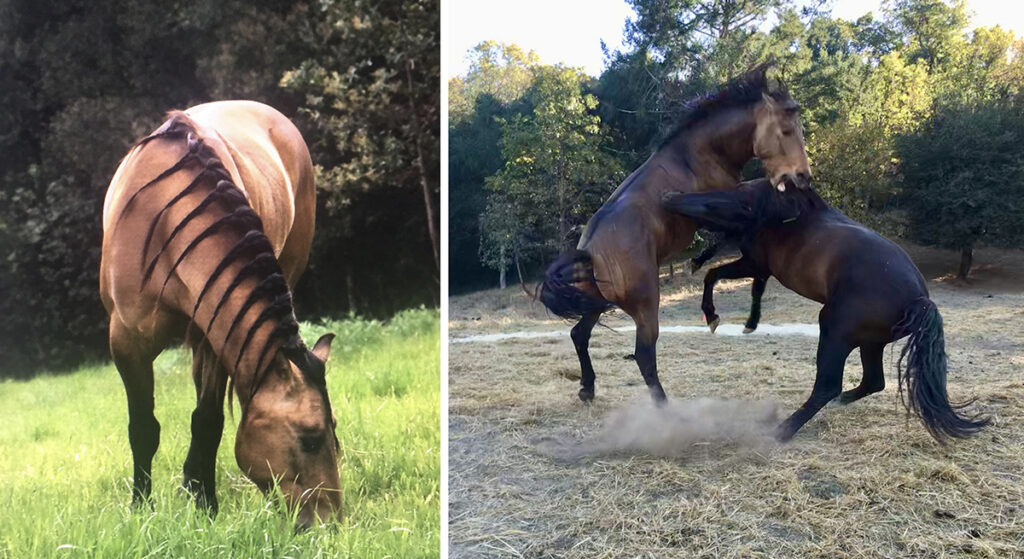
I’m an amateur dressage rider, Animal Reiki Practitioner, and trail enthusiast looking for my next happy, healthy trail partner. That means I’m horse shopping, which should be an exciting experience!
As of Summer 2025, I tested 19 horses for PSSM2/MIM as part of my pre-purchase process. These horses came from all backgrounds registered and grade. Draft crosses. Iberians. Morgans. Mustangs from the same herd. Even a grade Haflinger. Over half of the horses I tested carry one or more variants of PSSM2/MIM. The breeder of my affected horse, insisted the genes don’t guarantee clinical signs. Other skeptics say, “correlation doesn’t equal causation,” as if that explains away the welfare concerns many owners are seeing firsthand.
Maybe if your horse is a companion, or breeding stock not in work, you’ll never know. If they’re only used for breeding, and get trimmed twice a year, the cracks in health might stay hidden. But once they’re asked to work, the signs of pain are revealed. Stiffness. Resentment. Resistance. And acting like just being a horse is hard. Many are dangerously explosive. A grouchy “pain face” might be the only clue. These horses struggle to trailer and settle into a new environment as well. After my horse’s third explosive episode while on a short ride in the vineyard, I knew something was very wrong.
My young horse, a buckskin IALHA Lusitano started showing symptoms at age four, after his breeder had him gelded. Medical pros and trainers all said his behaviors were likely caused by hormones, and to give him a year to mature.
For more than two years, I gently trained, and paid my vet bills. His stiff and resentful way didn’t make sense. I had him professionally restarted but he went lame and was even more unhappy. Then a stranger on Facebook, someone who had quietly followed our journey, reached out and recommended EquiSeq testing.
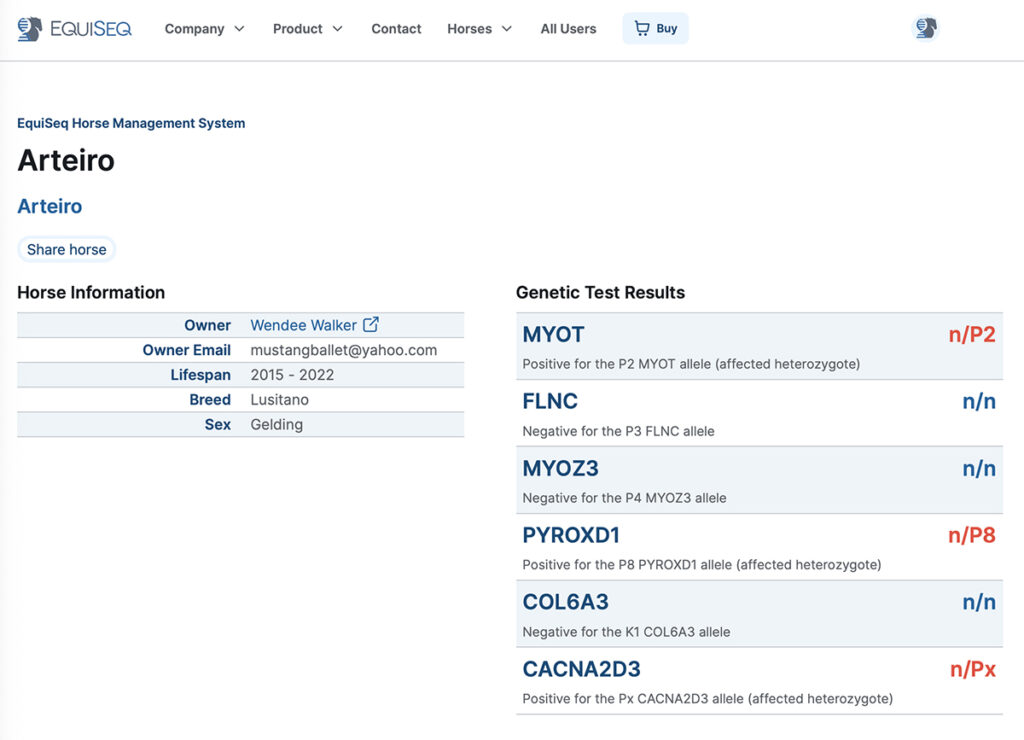
That simple hair test came back positive for PSSM2/MIM: n/P2, n/P8, and n/Px, which provided a direction and ideas for managing symptoms as guided by people in Facebook groups.
Even with diet changes, (magnesium, aminos, protein, and tested low carb hay) and at one point Equifeast, a chelated calcium approach imported from the UK, he didn’t ever become safely rideable. Tragically, he was euthanized at age seven. Later, I tested an unrelated Lusitano mare. She was also positive but for different variants. I didn’t buy her and it cost me a friendship. The breeder unfriended me. But the truth doesn’t go away just because people refuse to believe it.
Sound, rideable horses, are not easy to find. This isn’t about one breed or discipline, but it is a troubling pattern in our equestrian community.
There’s a breakdown in critical thinking across the equine world. Even experienced veterinarians resist anything that isn’t peer reviewed. But how can something ever become peer reviewed if the industry won’t even look at it beyond making expensive supplements that may or may not help. It’s a classic Catch-22.
Meanwhile, the anecdotal real-world data is piling up in Facebook groups and the bloodline tracking at Bridge Equine, where owners may submit their test results.
People can pretend that PSSM2/MIM is not real, however affected horses don’t have that luxury.
PSSM2/MIM is progressive. Horses don’t get better with rest. What begins as a little stiffness or reactivity often turns into dangerous behavior. A horse can’t tell you what hurts. They can only show you. And collectively we’ve been ignoring those signs for far too long.
The EquiSeq hair test is giving thousands of riders real answers. Once the owner knows which variants are there, they can experiment to manage them with targeted nutrition and care.
My horse had exercise intolerance and aggression towards other horses. He came from Oregon to California semi feral, with a high parasite burden. I thought improved care would help him recover. No matter the body work or multiple saddles and re-fittings, he had muscle atrophy along his topline and oddly, hypertrophy at the top of his front legs. We tried gentle training with positive reinforcement, chiropractic, acupuncture, massage, saddle fitters, top-notch traditional trainers. I pursued every lead.
With my vet, I ordered tests for EPM, Lyme, ECVM, KS. We scoped, radiographed, and examined everything. Spine. Teeth. Joints. Everything was clean! My vet said, “Something is wrong but I don’t know what it is, so be careful, he’s a punk.” I loved him, so those words stung.
Now I test for PSSM2/MIM before I buy. Anyone who has been through the heartbreak of losing a horse will never take that risk again. Many guardians leave horse ownership after experiencing the heartbreak.
Owning a horse with muscle myopathy variants is like caring for and loving a ticking bomb. The stiffness, the reactivity, the colic like episodes, the shutdown. You’ll call the vet again. You’ll get no answers. And still, in the US anyway, few medical pros will mention genetic testing.
In the UK and EU, warmblood registries already recommend testing before breeding. Testing before breeding is common sense and prevents heartbreak and breeding a horse that will struggle to thrive.
My story is not unique. So many guardians spend over $10,000 or more in diagnostics, without answers until genetic testing.
When I see sales ads saying, “We just didn’t click.” And, if it’s a mare? “Breeding sound only.” I suspect the heartbreak will continue. We need to breed from healthier stock. In sales, vet records are usually not passed along to the new owners and they may start over re-testing things that have already been cleared.
If presumably otherwise healthy dams and sires were tested before breeding, breeders could make wiser decisions for the generations that follow. Most riders are looking for a riding partner, not a health project.
PSSM2/MIM is the elephant in the equestrian community, and we can’t keep looking away from this neglected welfare concern. Genetic testing and responsible breeding offer a way forward.
Share this post
From the blog
The latest industry news, interviews, technologies, and resources.

A Drug for PSSM?
INTRODUCTION A new drug that inhibits glycogen synthase I, encoded by GYS1, reduces…
20 Feb 2026
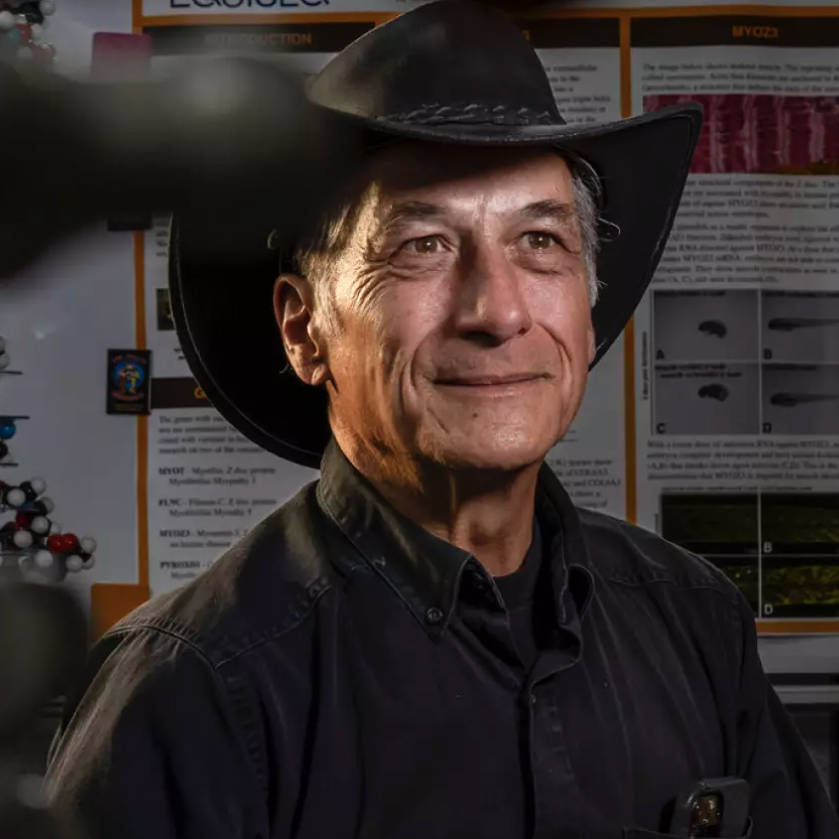
EquiSeq Featured in Albuquerque Journal
ALBUQUERQUE, NEW MEXICO – January 11, 2026 EquiSeq was profiled in the Business…
12 Jan 2026

EquiSeq is a biotech company offering
genetic testing for horses.
Resources
