
Our blog
Resources and insights
The latest industry news, interviews, technologies, and resources.
Blog categories
News
EquiSeq and Haw Creek Animal Hospital Raise $10,000 for Wilderwood Equine Therapy and Rescue
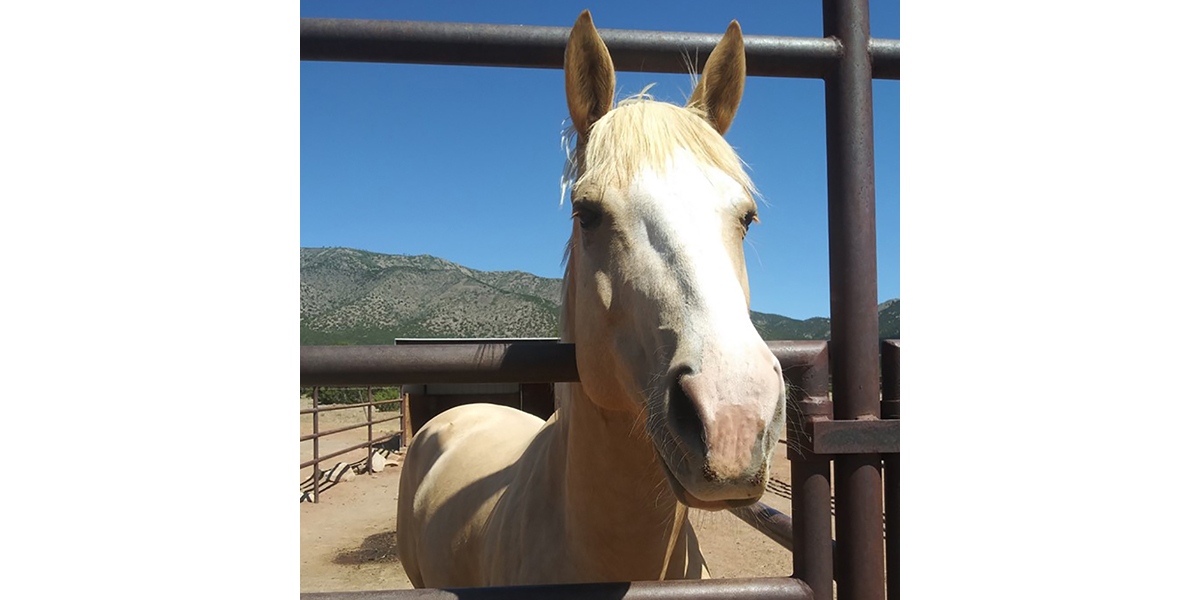
Peralta, New Mexico Paul Szauter, EquiSeq’s Chief Scientific Officer, attended an event at Wilderwood Equine Therapy and Rescue on October 30, to present Wilderwood with a donation from EquiSeq toward their equine therapy program. EquiSeq and Haw Creek Animal Hospital staged a joint fundraiser that raised $10,000 for Wilderwood. Wilderwood’s equine-assisted programs are an innovative and integrative approach designed for autistic adults and children (aged 8 and up) to strengthen authentic self-perception, self-possibility, and self-realization through mind/body interoceptive and somatic understanding combined with the philosophy of Hautism, which embraces and celebrates the innate connection between horses and autistic people. Wilderwood also rescues unwanted horses, provides them a lifetime loving home, and educates the community about horses and autism. Wilderwood adopted Lady Faith from EquiSeq. Lady Faith is n/K1 and free of other variants. She is the mare in which the K1 allele of COL6A3 was discovered by whole-genome sequencing.

30 Oct 2021
News
EquiSeq and Haw Creek Animal Hospital Join Fundraiser for Wilderwood Equine Therapy and Rescue
Albuquerque, New Mexico EquiSeq and Haw Creek Animal Hospital will join a charity fundraising effort for Wilderwood Equine Therapy and Rescue. EquiSeq will donate 10% of sales for the entire month of September 2021 to Wilderwood. Haw Creek Animal Hospital, in Asheville, North Carolina, stages a Labor Day Charity fundraiser every year, and this year will donate to Wilderwood from Labor Day sales. Wilderwood’s equine-assisted programs are an innovative and integrative approach designed for autistic adults and children (aged 8 and up) to strengthen authentic self-perception, self-possibility, and self-realization through mind/body interoceptive and somatic understanding combined with the philosophy of Hautism, which embraces and celebrates the innate connection between horses and autistic people. Wilderwood also rescues unwanted horses, provides them a lifetime loving home, and educates the community about horses and autism. EquiSeq became aware of Wilderwood when the charity agreed to adopt Lady Faith, a horse that has been part of EquiSeq’s research program for several years. Please watch this outstanding video about Wilderwood. Anyone wishing to donate to Wilderwood can reach out directly. Donations are tax-deductible. EquiSeq and Haw Creek Animal Hospital will publicly disclose their combined charity donation before the end of October.
18 Aug 2021

News
German Warmblood Associations Include Testing for EquiSeq Genetic Variants in Genotyping Platform
Albuquerque, New Mexico The International Association of Future Horse Breeding (IAFH), a group of five German Warmblood associations, has developed a large-scale genotyping platform (a SNP array) for breed improvement. They have added tests for the variants in EquiSeq’s Myopathy Panel to the array. Results will be available to horse owners through Generatio GmbH – Center for Animal Genetics, which holds the exclusive license for EquiSeq’s tests in the EU and the UK. Below is a translation of their press release. Horse breeders have health in mind The health of the riding horses is important for every breeder. The International Association of Future Horse Breeding (IAFH) is dedicated to it. The focus is also on hereditary diseases such as PSSM2. The IAFH provides fundamental scientific work that leads to breeding measures to ensure the health of horses in the future. With the availability of differentiated molecular genetic laboratory analysis, the possibilities to assess the genetic predisposition of individual horses are growing. This applies to all characteristics that have been influenced by hereditary factors in their form, regardless of whether they follow simple or complex inheritances and whether they relate to performance, appearance, or health. Especially for the monitoring of hereditary diseases,…
24 Apr 2021
News
Horse Breeding Associations Support Genetic Research on PSSM2
Vechta, Germany PSSM2 (Polysaccharide Storage Myopathy Type 2) is a much discussed topic. Now the horse breeding associations for Holstein, Trakehner, Hanoverian, Oldenburg and Westphalia want to make genetic material available for research purposes to a project of the International Association of Future Horse Breeding GmbH & Co KG (IAFH). Muscle wasting, lameness, stiff gait, ataxia – PSSM2 has many symptoms, and probably more causes. The muscle disease is moving more and more into focus (we deal with it in detail in the May issue of St.GEORG). Now, for the first time, there is a joint initiative by the four largest breeding associations and the Trakehners. It’s about providing genetic data for research. For this purpose, the International Association of Future Horse Breeding GmbH & Co KG (IAFH), founded in Vechta in 2017 and based there, will cooperate with the licensee of the European patent for EquiSeq’s PSSM2 test panel, Generatio GmbH – Center for Animal Genetics. PSSM2 only occurs in older horses, which is why the associations involved find it important to investigate this hereditary disease first in the joint project. The research activities are to be coordinated by the data experts of the VIT (United Information Systems for Animal…
26 Mar 2021

News
EquiSeq’s Chief Scientific Officer Speaks to Entrepreneurs
Albuquerque, New Mexico Paul Szauter, PhD, Chief Scientific Officer of EquiSeq, will present via Zoom at One Million Cups in Albuquerque on Wednesday, January 20, at 9:00 am MST. The format is a six-minute presentation followed by twenty minutes of questions and discussion. The presentation is open to the public via Zoom. Based on the notion that entrepreneurs discover solutions and engage with their communities over a million cups of coffee, the Ewing Marion Kauffman Foundation developed One Million Cups in 2012 – a free program designed to educate, engage and inspire entrepreneurs around the country. Through the power of volunteers, One Million Cups has grown to more than 160 communities. As a program of the Kauffman Foundation, One Million Cups works with entrepreneurs, empowering them with the tools and resources to break down barriers that stand in the way of starting and growing their businesses. Dr. Szauter founded EquiSeq in 2015 with no background in business. He was introduced to Albuquerque’s entrepreneurial community when he won a pitch competition in September 2014. He completed the ABQid Accelerator program in 2015. After a couple of years of regularly attending One Million Cups Albuquerque, he became one of the group’s volunteer organizers, recruiting and coaching other entrepreneurs. Dr. Szauter has…
15 Jan 2021
News
Generatio GmbH – Center for Animal Genetics Adds P8 and K1 Tests
Tubingen, Germany Generatio GmbH – Center for Animal Genetics (CAG) has added the P8 variant of PYROXD1 and the K1 variant of COL6A3 to its Variant Panel. These tests are now available to horse owners in the EU and UK. The launch followed licensing of these tests from EquiSeq. Generatio GmbH – Center for Animal Genetics (CAG) has the exclusive rights to these tests in the EU and UK. For horses already tested for P2 (MYOT), P3 (FLNC), P4 (MYOZ3), and Px (CACNA2D3), a test for P8 (PYROXD1) and K1 (COL6A3) is available. Horse owners in the EU and UK can order the 6-Variant Panel online from the Animal Trust Center (ATC).
30 Nov 2020
News
Podcast and Videos Explore Muscle Disease
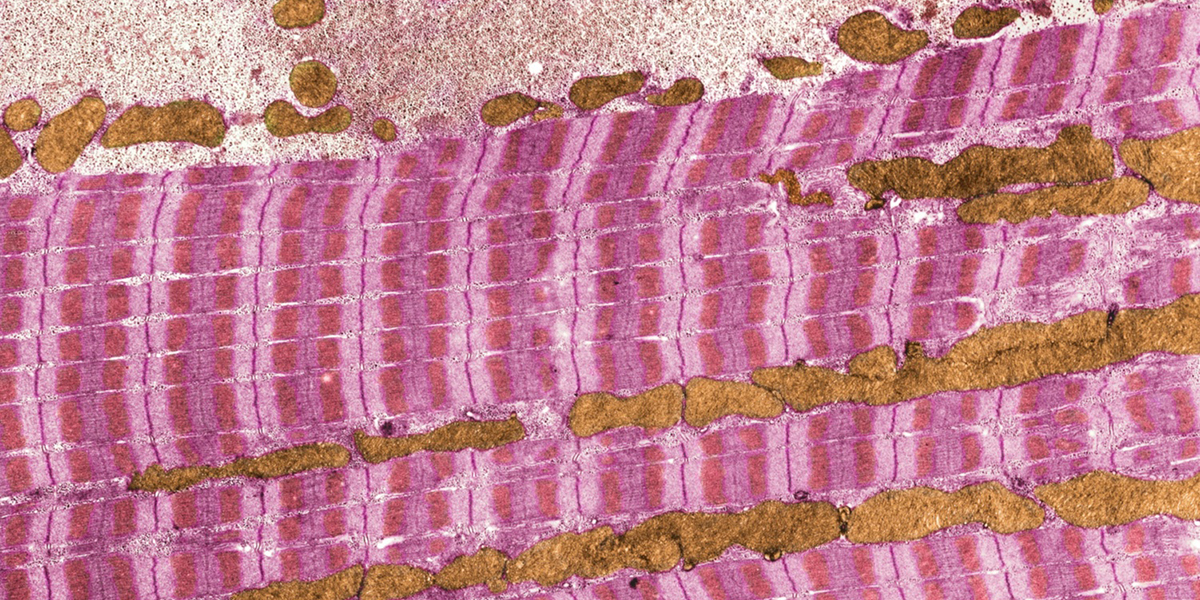
Albuquerque, New Mexico July 2020 was a great month for horse owners seeking to understand muscle disease. Eden River Equestrian interviewed Paul Szauter, EquiSeq’s Chief Scientific Officer, for episode 86 of their Come Along for the Ride podcast. In the interview, Dr. Szauter talked about the effects of the genetic variants that are included in EquiSeq’s Myopathy Panel, with an emphasis on symptoms that will be evident to horse owners. He specifically recommended a video on PSSM & MFM Symptoms at canter by Christine Lola Mahon of the PSSM & MFM Awareness Group on Facebook. After the podcast was aired, Christine Lola Mahon posted a detailed video showing the progression of PSSM2/MFM, The Harsh Reality of PSSM2. The Equine Extension Program at the University of Minnesota hosted a set of four seminars by Dr. Molly McCue of the Equine Genetics and Genomics Laboratory. The seminars were held as Facebook Live events. Horse owners watching in real time were able to post questions and comments. The seminars are available as Facebook videos as listed below. Part 1 Introduction to Muscle Disease Part 2 PSSM Part 3 RER & MFM Part 4 HYPP & IMM Dr. McCue encouraged horse owners to participate in the University of Minnesota muscle disease study. Please see their FAQs or contact…
30 Jul 2020
News
EquiSeq’s Kirsten Dimmler Accepted to PhD Program at the University of Minnesota
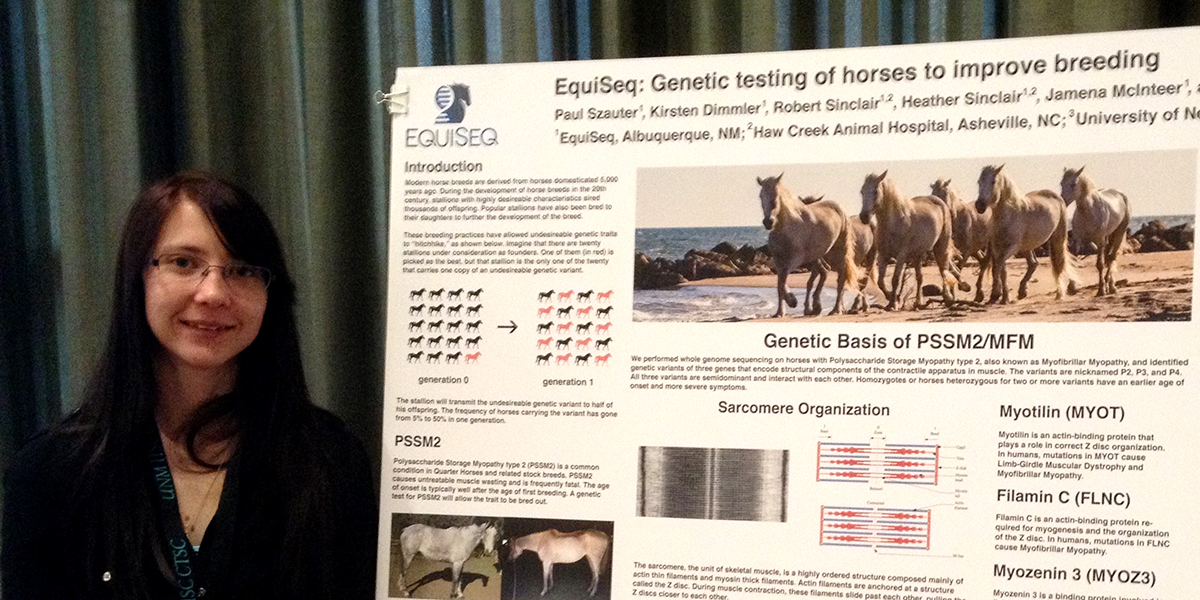
Albuquerque, NM Kirsten Dimmler, a Bioinformatics Analyst at EquiSeq, has accepted an offer of admission to graduate school in the College of Veterinary Medicine at the University of Minnesota. Kirsten will be entering the laboratory of Dr. Molly McCue, a leading veterinary expert in the field of equine genetics and genomics. Her admission to graduate school was originally scheduled for the fall of 2020, but has been deferred to January 2021 due to the COVID-19 pandemic. Kirsten began her career at EquiSeq with an internship while still an undergraduate biology major at the University of New Mexico. Following her graduation with a B.S. in Biology in December 2017, she began work at EquiSeq in bioinformatics. Her research involved evaluating potentially pathogenic mutations discovered in whole genome sequence data from horses with symptoms of exercise intolerance. The work led to a patent filing and the development of commercial genetic tests for horses. Kirsten was born and raised in Albuquerque, New Mexico. She has a passion for animals and had a goal of one day becoming a veterinarian. She purchased her first horse, an Appendix Quarter Horse mare named Esperanza, as a teenager and went on to compete in hunter/jumper with her….
17 Apr 2020
News
University of Minnesota Opens Study of Genetic Basis of Muscle Disorders in Horses
Saint Paul, Minnesota The Equine Genetics and Genomics Laboratory at the University of Minnesota is conducting a study using 3,000+ horses to study the genetic mechanisms behind different muscle disorders in horses and how diet and exercise may impact these disorders. The results of this study will provide veterinarians, researchers, and horse owners with information on genetic and management factors that influence muscle disease and aid in developing treatment strategies for muscle disease in individual horses. This will be the largest study of muscle disease ever conducted in the horse. To make this unprecedented study happen, we need help from the owners of horses affected by muscle disease. For more information about the study, FAQs, and detailed instructions about how to participate, please visit our study website . To contribute to this important effort owners will to need to: 1) Provide information in our Muscle Disease in Horses survey for a horse on your property with suspected or diagnosed muscle disease. 2) Provide the same information in the same survey for another horse of similar age and breed on your property without suspected or diagnosed muscle disease. Here is the survey . 3) Upload photos, videos, blood test results with creatine kinase (CK) and…
27 Jan 2020

News
EquiSeq adds P8 and K1 to Myopathy Panel
Fayetteville, AR At the Al Khamsa Annual Meeting and Convention today in Fayetteville, Arkansas, EquiSeq announced that it has added the P8 and K1 tests to the Myopathy Panel at no extra cost. EquiSeq’s Myopathy Panel, priced at $249, now includes tests for P2, P3, P4, Px, P8, and K1. The P8 and K1 genetic variants are missense alleles of undisclosed genes of known function. P8 and K1 are known to be pathogenic as a result of EquiSeq’s internal validation process. The genes will be disclosed in a peer-reviewed scientific publication. The P8 genetic variant is prevalent in Arabians, but has also be found in Thoroughbreds, stock breeds (Quarter Horses, Paints, and Appaloosas), Icelandics, and other breeds. The K1 genetic variant is prevalent in Arabians, but has also been found in Morgans, American Miniatures, Haflingers, and Standardbreds. It is rare in stock breeds (Quarter Horses, Paints, and Appaloosas) and appears to be absent in Thoroughbreds. Tests for the P8 and K1 genetic variants will be included at no extra cost in EquiSeq’s Myopathy Panel through January 31, 2020. After that, the price of the Myopathy Panel will increase to $299.
13 Oct 2019

News
EquiSeq to host webinar on Recurrent Exertional Rhabdomyolysis (RER)
ALBUQUERQUE, NEW MEXICO – March 16, 2026 EquiSeq will host a webinar on…
16 Mar 2026
News
EquiSeq Profiled on KRQE
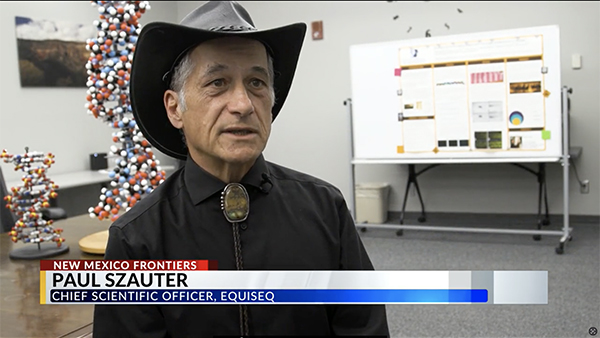
ABQ startup hopes to end horse disease with genetic research and testing. View…
11 Mar 2026
News
EquiSeq Featured in Albuquerque Journal
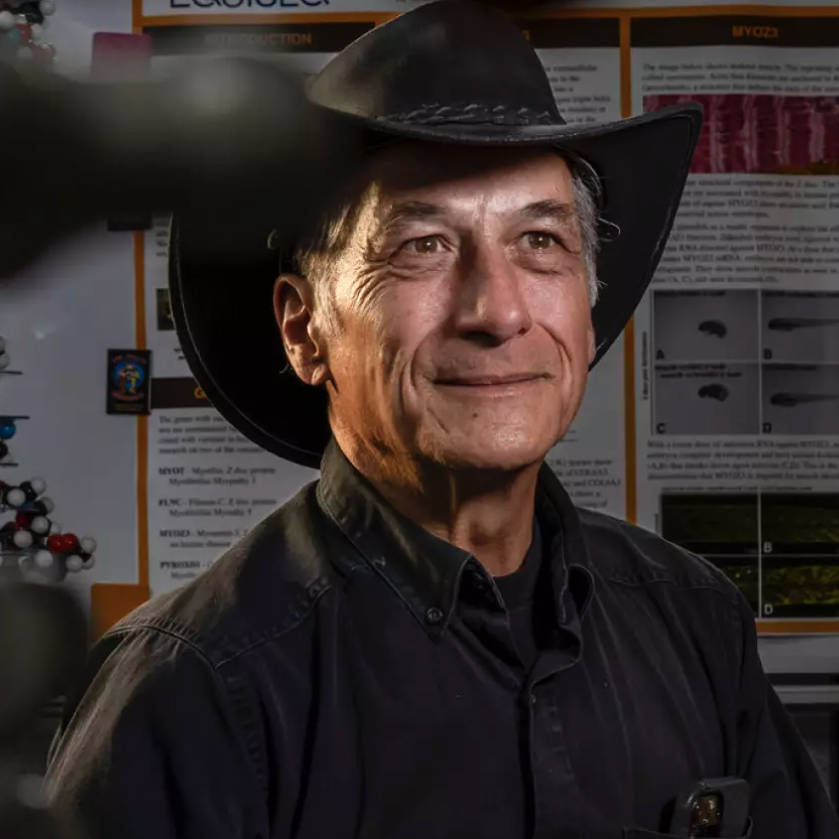
ALBUQUERQUE, NEW MEXICO – January 11, 2026 EquiSeq was profiled in the Business…
12 Jan 2026

News
EquiSeq Announces Issuance of Second U.S. Patent to Detect Muscle Disease in Horses
ALBUQUERQUE, New Mexico – December 16, 2025 – EquiSeq Inc, a biotechnology company…
16 Dec 2025

News
EquiSeq Holds First Webinar
ALBUQUERQUE, NEW MEXICO – November 13, 2025 EquiSeq held its first Decoding Horse…
13 Nov 2025

News
EquiSeq’s DNA Test Changes the Landscape
ALBUQUERQUE, NEW MEXICO – October 14, 2025 The October 2025 issue of Equine…
14 Oct 2025
News
EquiSeq Announces Issuance of U.S. Patent to Detect Genetic Variants Causing Muscle Disease in Horses
ALBUQUERQUE, New Mexico – September 2, 2025 – EquiSeq Inc, a biotechnology company…
2 Sep 2025

News
Experienced Equestrian Joins EquiSeq Board
Albuquerque, New Mexico, USA June 20, 2025 EquiSeq, a leader in developing genetic…
20 Jun 2025

News
Science Team Meets to Discuss Projects
Four members of EquiSeq’s Scientific Advisory Board. Left to right: David Nannemann, Paul…
3 Jun 2025
News
Twenty European countries issue patent on EquiSeq DNA tests
ALBUQUERQUE, NEW MEXICO EquiSeq announced today that a group of twenty countries in…
14 Jan 2025

EquiSeq is a biotech company offering
genetic testing for horses.
Resources
