
Posts by Paul Szauter, PhD, Chief Scientific Officer, EquiSeq
EquiSeq to present webinar on HERDA

Albuquerque, New Mexico July 29, 2026 EquiSeq will present a webinar entitled Understanding HERDA: A Veterinarian’s Perspective on Genetics & Management on Tuesday, August 11, at 10:00 am MDT (12:00 pm EDT) on Zoom. The webinar features Dr. Abby McElroy, DVM, who has conducted research on horses with HERDA. Join us for the next Decoding…
Read MoreAlbuquerque The Magazine Profiles EquiSeq

Albuquerque, New Mexico, USA July 1, 2026 Albuquerque The Magazine profiled EquiSeq in its July 2026 issue. It’s Hereditary Austin Seidel When it comes to sequencing genomes, EquiSeq isn’t horsing around. Founded by scientist Paul Szauter, local startup EquiSeq has spent the last decade helping horse owners better understand life-threatening, inherited diseases through advanced genetic…
Read MoreVeterinarian Joins EquiSeq Board

Albuquerque, New Mexico, USA June 29, 2026 EquiSeq, a leader in developing genetic tests for horses, is pleased to announce the appointment of Dr. Abigail McElroy, an equestrian and veterinarian currently working on a PhD, to its Board of Directors and Scientific Advisory Board. Dr. McElroy earned her veterinary degree from the Cummings School of…
Read MoreCarnegie Mellon University Profiles EquiSeq Founder

April 20, 2026 – Pittsburgh, Pennsylvania The alumni magazine for Carnegie Mellon published an article about Carnegie Mellon alumnus Paul Szauter (B.S. in Biological Sciences, 1976) founder and Chief Scientific Officer of EquiSeq. Read the full article at Carnegie Mellon’s website.
Read MoreEquiSeq hosts webinar on Recurrent Exertional Rhabdomyolysis (RER)

ALBUQUERQUE, NEW MEXICO – April 4, 2026 EquiSeq hosted a webinar on Recurrent Exertional Rhabdomyolysis (RER) on March 30, 2026. Our guest was Kirsten Dimmler, PhD, who recently completed her dissertation on RER at the University of Minnesota under the direction of Dr. Molly McCue. Moderator Madison Sanders and EquiSeq’s Chief Scientific Officer, Paul Szauter,…
Read MoreEquiSeq Profiled on KRQE
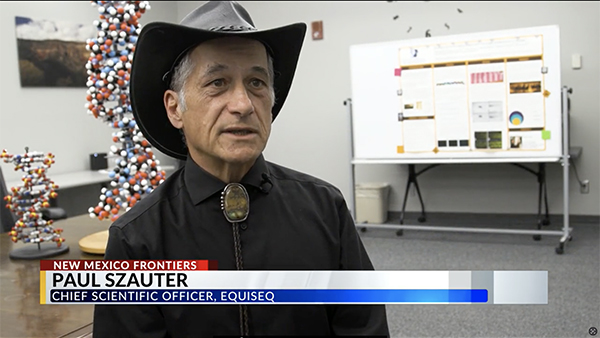
ABQ startup hopes to end horse disease with genetic research and testing. View video on KRQE website. Albuquerque, New Mexico – March 11, 2026 NEW MEXICO (KRQE) — Horses are just as much a part of New Mexico’s story as green chile and balloons. One local startup is hoping their research could lead to the…
Read MoreA Drug for PSSM?

INTRODUCTION A new drug that inhibits glycogen synthase I, encoded by GYS1, reduces muscle glycogen in a mouse model of Pompe disease, a deficiency of the enzyme alpha-1,4-glucosidase, encoded by GAA (1). The first human trials of the drug in healthy volunteers show a reduction in muscle glycogen (2). It is likely that the drug will…
Read MoreEquiSeq Featured in Albuquerque Journal
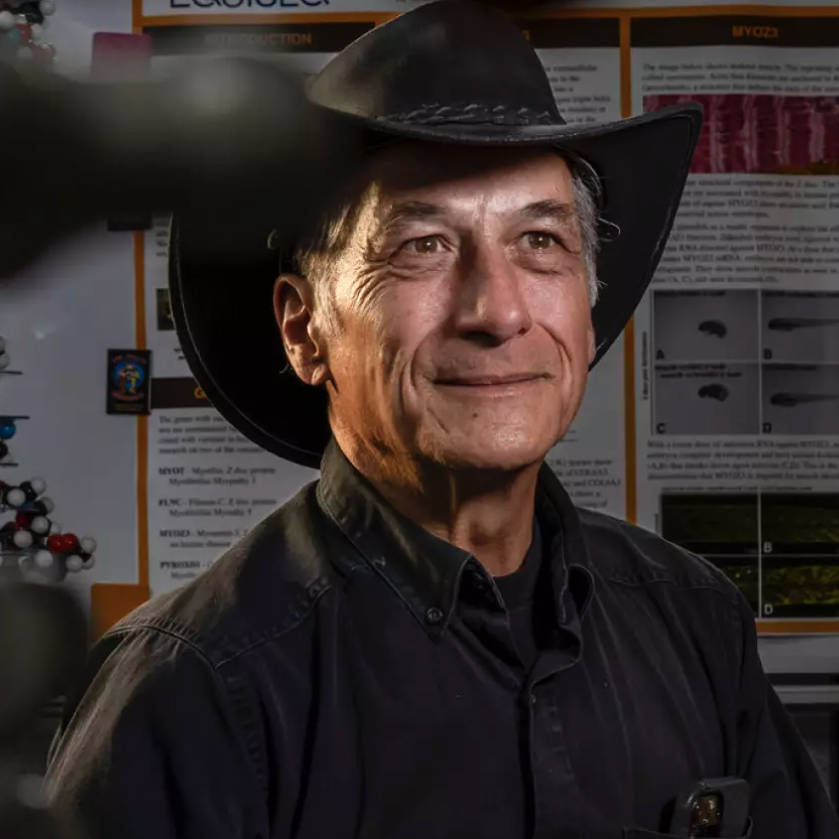
ALBUQUERQUE, NEW MEXICO – January 11, 2026 EquiSeq was profiled in the Business section of the Albuquerque Journal on January 11, 2026. The article, by writer Hannah Garcia, described the company’s origins and the road ahead, based on interviews with Paul Szauter, Chief Scientific Officer; Madison Sanders, an equestrian who is a member of EquiSeq’s…
Read MoreEquiSeq Announces Issuance of Second U.S. Patent to Detect Muscle Disease in Horses

ALBUQUERQUE, New Mexico – December 16, 2025 – EquiSeq Inc, a biotechnology company developing DNA tests for inherited muscle disease in horses, announced today that the United States Patent and Trademark Office has issued U.S. Patent Number 16/088,247, “Method of Detecting Inherited Equine Myopathy.” The patent includes claims covering specific genetic mutations that predispose to muscle disease…
Read MoreEquiSeq Holds First Webinar

ALBUQUERQUE, NEW MEXICO – November 13, 2025 EquiSeq held its first Decoding Horse Health webinar on Zoom on November 11, 2025. Madison Sanders (Elite Equine Marketplace and EquiSeq) interviewed Paul Szauter, PhD (EquiSeq’s Chief Scientific Officer) and Stephanie Carter, FNTP (Indigo Ancestral Health). The webinar focused on inherited muscle disease in horses. Dr. Szauter discussed…
Read More